How to Write a Meta Description That Earns More Clicks
A practical guide to writing meta descriptions that match search intent, avoid common SEO mistakes, and help site owners earn better clicks.

A meta description is the short page summary that may appear under your title in Google search results. It does not directly make a page rank higher, but it can help the right searcher understand your page faster and choose your result instead of another one. For site owners doing SEO themselves, that makes meta descriptions one of the simplest on-page improvements to review: quick to write, easy to test, and especially useful on pages that already get impressions.
The practical goal is not to trick Google or squeeze in every keyword. The goal is to write a clear promise: what the page is about, who it helps, and why it is worth the click. This guide shows you how to write a meta description, how long it should be, which pages to fix first, and how to avoid the common mistakes that make Google rewrite your snippet.
What is a meta description?
A meta description is an HTML tag that summarizes a specific page. In the page source, it usually looks like this:
<meta name="description" content="A short, useful summary of the page.">When Google thinks your description is a good match for the search, it may use it as the snippet below your title. Google may also rewrite the snippet from visible page content when another sentence better answers the query. That is normal. Your job is to give Google and searchers a strong, accurate option.
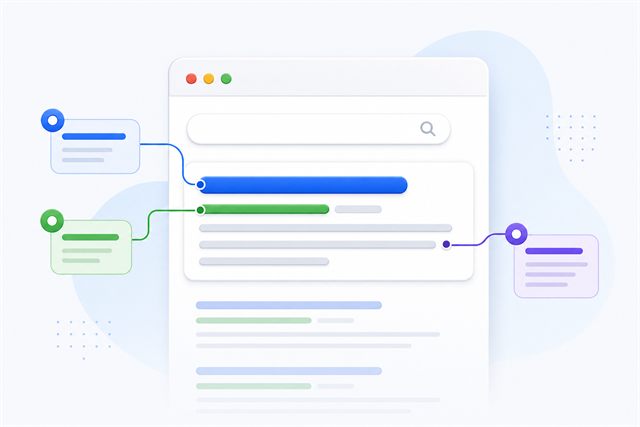
For a small business website, the meta description often appears on important pages such as the homepage, service pages, category pages, product pages, and blog posts. If those pages have missing, duplicated, vague, or misleading descriptions, searchers may skip them even when the page ranks well enough to be seen.
Does a meta description help SEO?
A meta description is not a direct ranking factor in the simple sense: adding one does not automatically move a page from position eight to position three. Google has said snippets are chosen to help users understand results, and Google often generates its own snippet when it believes that will be more relevant.
But meta descriptions still matter for SEO work because they influence how your page is presented. A useful snippet can improve the chance that a qualified searcher clicks your result. It can also make your page look more trustworthy when it is shared in messaging apps, social platforms, or workplace tools that use page metadata for previews.
The best way to think about it is this: rankings get your page into the conversation; the title and snippet help the searcher decide whether to visit. If your page already receives impressions in Google Search Console, improving the description can be a quick win. If your page has no impressions and poor content, start with content quality and indexing first.
How long should a meta description be?
A safe working range is usually about 120 to 155 characters. That is not a hard law. Google truncates by pixel width, device, query, and bolded words, not by a single universal character count. Shorter descriptions may work well for mobile. Longer descriptions may still be useful if the key message appears early.
For DIY SEO, use this rule: write one clear sentence, sometimes two short sentences, and put the most important information first. If the last few words are cut off, the description should still make sense.
A weak description sounds like this: “Welcome to our website. We offer quality services and helpful information for customers.” It is generic, could fit any page, and gives the searcher no reason to choose it.
A stronger description sounds like this: “Learn how to write a meta description that matches search intent, earns clicks, and avoids common SEO mistakes.” It says what the reader gets, includes the topic naturally, and sets a clear expectation.
How do you write a meta description?
Start with the searcher, not the tag field. Before writing, ask: what did this person search, what page are they landing on, and what answer or outcome do they expect? A good meta description usually includes four parts:
- The topic: make it obvious what the page covers.
- The benefit: explain what the visitor will learn, solve, compare, buy, or do.
- The intent match: use language that fits the search, not internal company jargon.
- A natural action: invite the click without sounding desperate or spammy.
Use the primary keyword once if it fits naturally. For this article, that phrase is “meta description.” On a service page, the phrase might be “emergency plumber in Austin” or “custom kitchen cabinets.” On a product page, it might be the product type and the main differentiator.
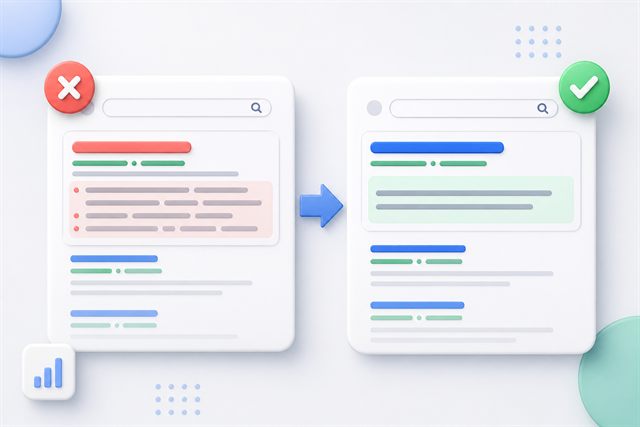
Do not promise something the page does not provide. If your snippet says “pricing,” the page should include pricing or at least a clear pricing explanation. If it says “template,” the page should include a template. Misleading snippets can increase clicks briefly, but they create disappointment, pogo-sticking, and weak engagement signals.
Here is a simple formula you can use:
Verb + topic + specific benefit + audience or context.
Example: “Learn how to write a meta description that earns more qualified clicks, with examples for blog posts, service pages, and product pages.”
Meta description examples you can adapt
The right description depends on the page type. Here are practical patterns you can adapt without copying them blindly.
Blog post example
Page: A beginner guide to internal linking.
Description: “Learn how internal linking helps visitors and search engines, plus a simple checklist for adding better links to your most important pages.”
This works because it tells the reader what they will learn and mentions the useful deliverable: a checklist.
Service page example
Page: Local accounting services for small businesses.
Description: “Get small business accounting help for bookkeeping, payroll, and tax planning, with clear monthly support from a local team.”
This works because it is concrete. It names services, audience, and the type of help offered.
Product or ecommerce example
Page: Waterproof hiking backpack.
Description: “Compare lightweight waterproof hiking backpacks built for day trips, wet weather, and organized gear storage.”
This works because it matches the likely buyer’s decision criteria instead of repeating a generic product name.
Homepage example
Page: A DIY SEO tool for site owners.
Description: “Check your website SEO, find practical fixes, and track what to improve next without needing a full SEO agency.”
This works because it explains the product in plain English and speaks to the audience’s problem.
How do you audit meta descriptions on your site?
If your site has more than a few pages, do not rewrite descriptions randomly. Prioritize the pages where a better snippet could actually matter.
Start with these groups:
- Pages with impressions but low CTR: Google is showing them, but searchers are not clicking enough.
- Important money pages: homepage, service pages, product categories, and high-value landing pages.
- Pages with missing descriptions: especially if the first visible text on the page is navigation or generic copy.
- Duplicate descriptions: pages that all say the same thing, which makes them hard to distinguish.
- Descriptions that no longer match the page: old offers, outdated services, or content that has changed.
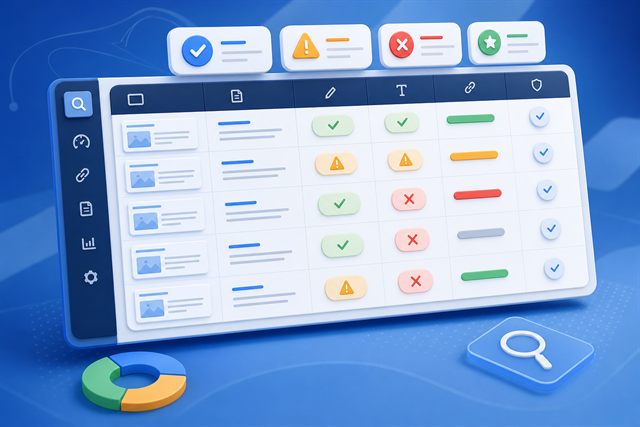
You can do a quick manual check by opening a page, viewing the source, and searching for meta name="description". That works for one page. For a whole site, a crawler or audit tool is faster. SerpCue’s SEO audit tool is built for this kind of review: find on-page issues, prioritize what matters, and turn vague SEO advice into specific fixes.
If you are also cleaning up technical issues, review related basics at the same time. Broken internal links, missing titles, weak headings, and poor internal linking can hold back the same pages you are trying to improve. If you have not checked recently, this guide on finding and fixing broken links pairs well with a meta description audit.
How do you measure whether they worked?
Do not judge a meta description rewrite the next morning. Search results fluctuate, Google may rewrite snippets, and CTR changes need enough impressions to mean anything.
A practical measurement process looks like this:
- Choose a page with meaningful impressions in Google Search Console.
- Record the query, page, clicks, impressions, CTR, and average position for the previous 28 days.
- Rewrite the meta description and note the date.
- Wait two to four weeks, depending on traffic volume.
- Compare CTR while also checking whether average position changed.

CTR alone can mislead you. If a page moves from position four to position nine, CTR will usually fall even if the description improved. If position stays similar and CTR rises, your new snippet may be helping. SerpCue’s Search Console SEO workflow is designed around this kind of page-and-query review, especially for pages that already have impressions but need better clicks.
For more background on the Search Console reports worth checking, read Google Search Console for beginners. If a page is already close to page one, the same measurement habit also helps with page-two keyword opportunities.
Common meta description mistakes to avoid
The most common mistake is treating meta descriptions as a ranking hack. That leads to keyword stuffing, awkward copy, and descriptions that sound like they were written for a crawler instead of a person.
Avoid these patterns:
- Duplicating the same description across many pages. If every service page has the same summary, searchers cannot tell them apart.
- Writing only about your company. Searchers care about their task, problem, or decision first.
- Using vague filler. Phrases like “high-quality solutions” and “trusted experts” are weak unless supported by specifics.
- Overpromising. Do not mention discounts, templates, free tools, or examples unless the page actually includes them.
- Ignoring the first paragraph. Google may pull visible page text instead, so your intro should also summarize the page clearly.
If you only have time for one improvement, rewrite descriptions on pages that already get impressions and have weak CTR. That is where better snippet copy is most likely to matter.
FAQ
Do meta descriptions affect rankings?
Not directly in the way title relevance, content quality, links, and technical accessibility can. Their main value is presentation: helping searchers understand the page and decide whether to click.
Why does Google rewrite my meta description?
Google may rewrite a snippet when it thinks visible page content better matches the specific query. This is normal. Write a strong description anyway, and make sure the page intro also clearly answers the topic.
Should every page have a unique meta description?
Important indexable pages should have unique descriptions. For very large sites, prioritize pages that matter most: pages with impressions, traffic, conversions, or clear business value.
Can I use AI to write meta descriptions?
Yes, but review the output. AI can produce useful first drafts, but it may make descriptions too generic, too long, or slightly inaccurate. Always check the final copy against the actual page.
Next step
Pick ten important pages and review their descriptions today. Look for missing, duplicated, vague, or outdated snippets first. If you want a faster way to find those issues across your site, run a SerpCue SEO audit and use the results as your rewrite list.